
Inside the Traverse County Most Wanted Program
Traverse County has no most wanted program, and that is worth saying plainly. No gallery, no reward fund, no roundup. There is also no anonymous tip page run locally. What the county publishes instead is a warrant list through the Sheriff's Office, refreshed from time to time. It is a compiled status sheet of active warrant entries, not a ranked gallery built for publicity. Anyone running a Traverse County warrant search should treat it that way. The nearest substitutes for a most wanted effort live at the state and federal level. One is a tip program run by Crime Stoppers. The other is a fugitive effort led by the U.S. Marshals Service.
What Traverse County Warrant Lists Actually Publish
The Sheriff's warrants page posts a compiled document, not a searchable warrant database. One version ran seven pages. It carried a printed date and a running total of 73 records, so treat that count as a single day's snapshot rather than an average. The columns are sparse: a photo position, the name, the date issued, and a charge area. That is all. No case number appears. No issuing court, judge, bond amount, or status column either. Nothing on the page says whether every current Traverse County warrant made the cut, or how a cleared record comes off. Note: The list carries no completeness statement, so a missing name proves nothing.
How Traverse County Most Wanted Lists Work
Any most wanted list is a curated slice of a much larger set of open warrants, built when an agency wants public attention on a few cases. Those are usually felonies with a public-safety angle. Traverse County does none of that curating. Its output is the periodic warrant list, nothing more. Where these programs exist, a name goes on when an agency chooses to publicize a case. It comes off after an arrest, surrender, or recall. A reader hunting a publicized Traverse County roster finds gaps instead of a complete picture. Tip programs refresh on their own schedule, so read the date on whatever you are viewing.
How Traverse County Warrants Reach a Federal Fugitive Case
Federal fugitive work in Minnesota runs through the U.S. Marshals Service, District of Minnesota, which lists Traverse County among the counties it covers. Call the district office at 612-664-5900. The North Star Fugitive Task Force answers at 612-664-5910. The district page posts no profiled fugitive information. Federal involvement changes the paperwork, too. A federal arrest warrant runs through the U.S. District Court for the District of Minnesota, not the Traverse County Sheriff's Office. PACER is the public docket route when a federal record is unsealed. Federal warrants and surveillance orders stay sealed until a court orders otherwise, so a name missing from the county list may sit in a sealed federal file no county office can confirm.
Minnesota Crime Stoppers and Traverse County Tips
Minnesota Crime Stoppers runs the statewide tip program. It is not a Traverse County operation. No county source describes a partnership or local reward pool with it. The line answers live around the clock at 800-222-8477. Web and app submissions work too, and each tip gets a unique identifier. The program advertises rewards of up to $1,000 for information leading to a felony arrest and describes a 90-day window for claiming one. The program's own rules sit at crimestoppersmn.org.
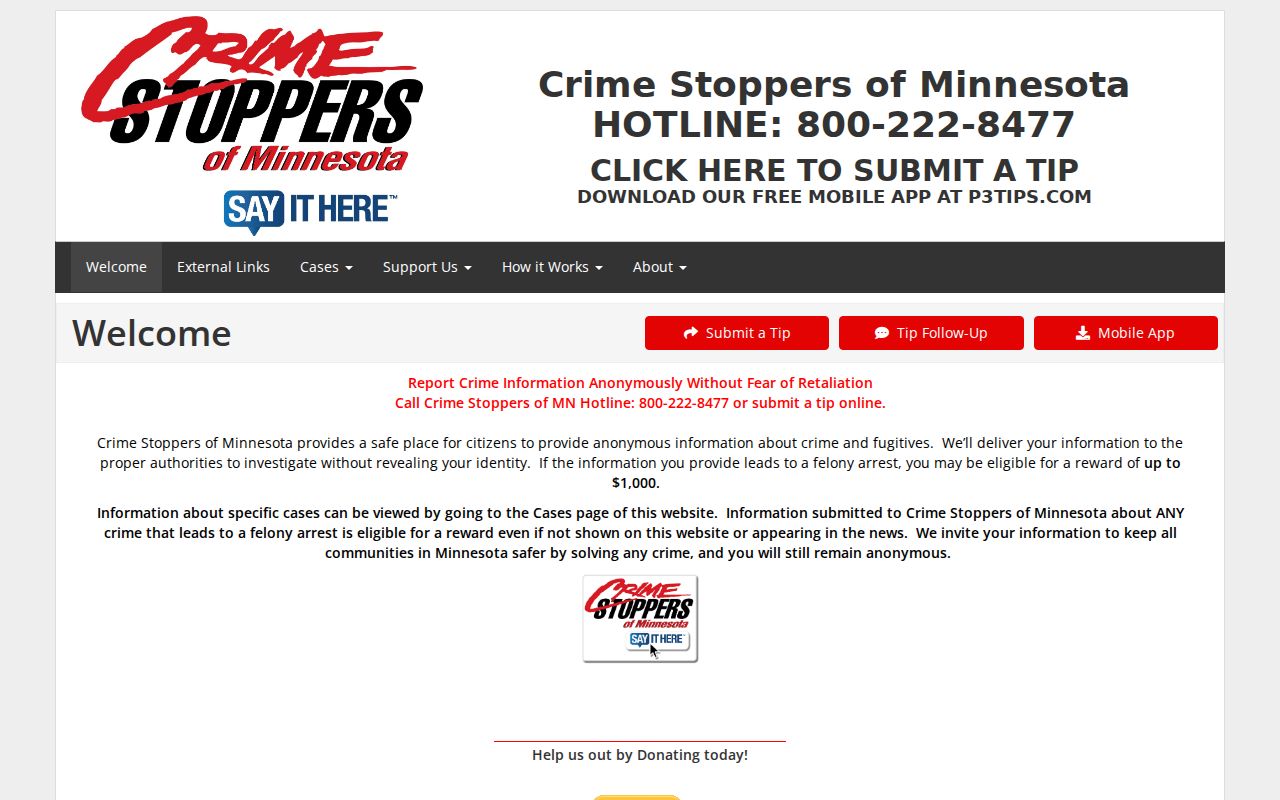
Think of it as a statewide channel that takes information on a Traverse County case, not as a local program.
Sending a Most Wanted Tip Safely
A tip helps only when it reaches the right office. Getting it there should never put you in the middle of a Traverse County case.
- Use the official channel, either the Crime Stoppers line and web form or the federal task force number.
- Give the location, the time, and a description of what you saw.
- Write down the tip identifier, since it is the only way to follow up anonymously.
- Never approach or follow anyone yourself, and never send a tip through a personal account.
Key Point: Anonymous tips go to the agency handling the case. A tip is not a warrant check and does not make you a party to the case.
Traverse County DOC Fugitives Are a Separate List
Minnesota's Department of Corrections runs its own wanted fugitives page for people who walked away from state supervision. That page is not a court warrant list. It has no tie to Traverse County cases. The public viewer sits at mn.gov/doc. Someone can appear there for a supervision violation while holding no county court warrant, and the reverse holds true too.
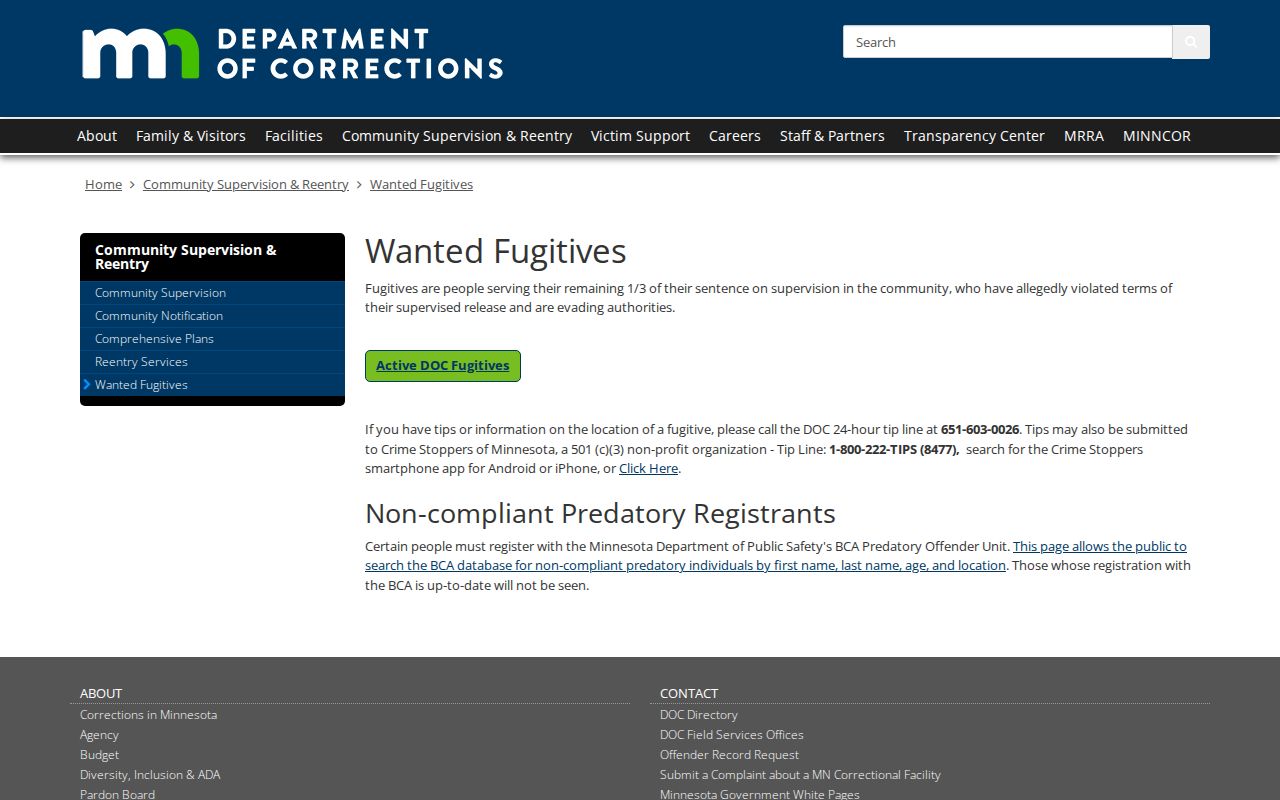
That page is the state's supervision channel, and no Traverse County office maintains it.
How Most Wanted Differs From an Active Warrant
A most wanted listing and an active warrant are different things.
| Feature | Most Wanted Listing | Active Warrant |
|---|---|---|
| Scope | A curated subset chosen for publicity | Any warrant not yet served or cleared |
| Who publicizes it | A sheriff, a task force, or a tip program | Rarely publicized at all |
| What the public sees | Often a name and a photograph | A list row, or nothing online |
| How it ends | Arrest, surrender, or a recall | Same options, with no publicity step |
Traverse County sits on the right side of that table. The published warrant list is the county's only standing public output, and the active warrant search page explains how to read it.
Why Traverse County Warrant Records Never Appear Here
No wanted-person roster appears here, and the omission is deliberate. Traverse County agencies publish what they choose. A copied list goes stale the moment it posts, and it would parade what the county itself holds back. State law points the same way. Minnesota Statutes 13.82 keeps arrest-warrant index data private until custody, service, or a court appearance, unless publication serves a public purpose. Photographs and juvenile records face tighter limits still. Minnesota Statutes 260B.171 sets those rules. A gallery built from warrant records would publish exactly what Traverse County withholds, so rely on the official list and the official tip pages, which stay current on their own.
When You Believe You Are Listed
Think you are on a Traverse County list? Start with a call, not a confrontation. A calm question to the right office beats a guess every time. An attorney can confirm what exists and what the court will accept. Court Administration answers the case side, including the issuing court and what an appearance would require. The Sheriff's Office handles custody, service, and booking questions. Use 911 only for an emergency.
Important: Talk to an attorney before acting on a possible warrant. Do not walk into an agency unprepared or approach anyone you believe is wanted.
Why a Traverse County Warrant Can Stay Hidden
Plenty of ordinary reasons hide a name. A Traverse County warrant can issue after the list was printed. A pending criminal or traffic case may be withheld from any remote name search. Sealed and juvenile matters never appear publicly. Federal warrants stay sealed until a court orders otherwise. An agency can hold arrest-index data until custody or service, and none of this means the record is clear. Ask the office holding the file instead: Court Administration confirms court records, and the Sheriff's Office confirms custody and service.
Traverse County Warrant Records and Tip Channels at a Glance
Four channels cover this ground, and each one answers a different question.
| Channel | What It Covers | How to Use It |
|---|---|---|
| Traverse County Sheriff | Custody, service, and the published county list | Call the general line or open the warrants page |
| Court Administration | Case status, hearings, and court records | Call the courthouse or search the court portal |
| U.S. Marshals, District of Minnesota | Federal fugitive cases covering the county | Call the district office or the task force |
| Minnesota Crime Stoppers | Statewide anonymous tips and rewards | Call the tip line or use the web form |
Anyone who wants the full county picture can start from Traverse County warrant records.