
Outstanding Warrants in Traverse County
Traverse County publishes one countywide list of outstanding warrants, and it comes from the Sheriff's Office as a periodic PDF rather than a searchable database. The District Court keeps the case-level warrant record for everything filed in the county. The state's public portal adds a warrant flag on individual cases when remote access permits it. Those two sources answer different questions. The list shows what one office chose to publish on one day. The court file shows what a judge signed, the bail set on it, and whether the case is still open. Treat them as complements, not substitutes, when you run a Traverse County warrant check.
What the Warrant Wednesday Columns Show
The compiled list stays short because it carries only four fields across its pages. What a reader needs in order to act sits in the Traverse County court file instead.
Four columns appear: a photo position, a name, the issue date of the warrant, and the charge text. Charge wording in Traverse County entries sometimes carries a statute citation. Phrases like failure to appear or contempt show up in the charge area, not in a separate field.
The Traverse County Active Warrant List
The Traverse County Sheriff's Office compiles the list on its own schedule and publishes it as a PDF with a printed date at the top. The document does not say whether every current warrant is included. It does not explain how a cleared record comes off. It carries no status column that would tell you whether a warrant has been served since the last printing. That makes the file a starting point for a Traverse County warrant lookup, not a conclusion. Read a match as a reason to call the court.
Note: The list updates on its own schedule and lags real events. A missing name is not proof that no warrant exists.
Why the Printed Date Matters
Most readers scan for a name and stop. The date and the charge column decide how much weight an entry deserves. A warrant issued two days before the printing may already have been served, and one open for years may reflect a case the court would resolve on a payment plan rather than an arrest. Traverse County publishes no update cadence for the file. The only reliable statement about an entry is what the court says when you call.
Active Warrants: What They Show
A published entry and the case behind it carry different fields. The Traverse County list gives you enough to spot a possible match. The court record gives you enough to decide what to do.
| Charge text | The offense wording in the published list, sometimes with a statute citation. The list has no warrant type column. |
|---|---|
| Date issued | The date the warrant was issued, not the date of any later service, hearing, or recall. |
| Name | The name as the agency recorded it. Aliases and spelling variants live in the court file. |
| Warrant type | Not published. The court file labels the warrant as arrest, bench, traffic, or another category. |
| Status | Not published. Active, served, or recalled comes from the court that issued it. |
| Bond or bail | Not published. The judge sets it when the warrant issues, and the court keeps the record. |
Arrest-Index Publication Limits
Minnesota draws the line between public and confidential warrant data, and the line moves with the case. Minnesota Statutes 13.82 makes data in an arrest-warrant index confidential until custody, service, or appearance, unless the agency decides that publishing it serves a public purpose. That is why a Traverse County list cannot be read as the complete set of warrants. The agency has some discretion over what appears, and the underlying case data can carry its own access limits.
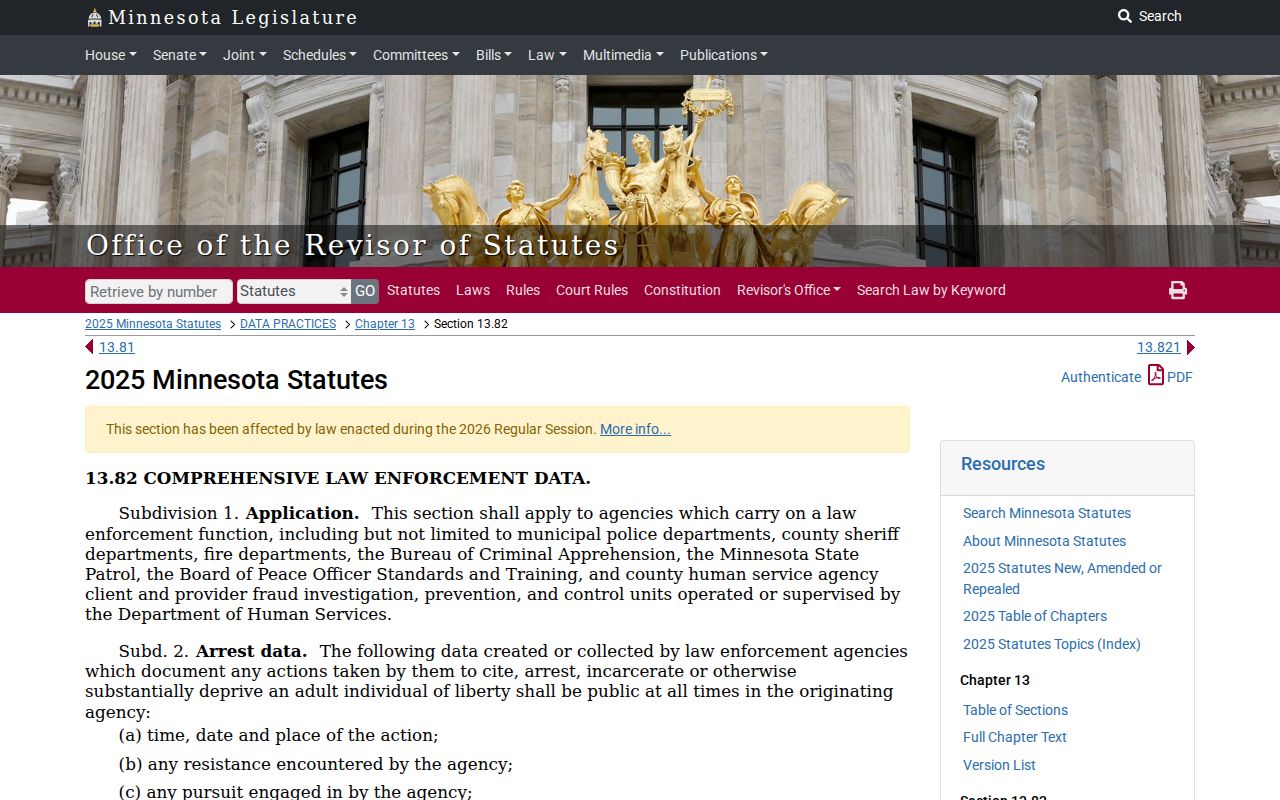
That page sets out the confidentiality rule itself. It is the section Traverse County courts cite when a warrant search comes back empty.
County List Versus the State Network
Minnesota runs no public statewide warrant search. Minnesota Statutes 299C.115 requires county warrant information to be available to the criminal-justice network through the Bureau of Criminal Apprehension warrant file or a county query. That duty runs to authorized agencies, not to the public, so Traverse County residents cannot tap it directly.
| Feature | County Published List | State Network |
|---|---|---|
| Who can see it | Anyone, from the county page | Authorized criminal-justice users |
| What it holds | Names, dates issued, and charges | Outstanding felony, gross-misdemeanor, and misdemeanor warrant data |
| How you reach it | One link on the Sheriff's Warrants page | No public portal exists |
| What it proves | What that office published that day | What agencies can query, not what the public can confirm |
The Judicial Branch also runs Minnesota Government Access for government users only. There is no public login, so Traverse County has no route in.
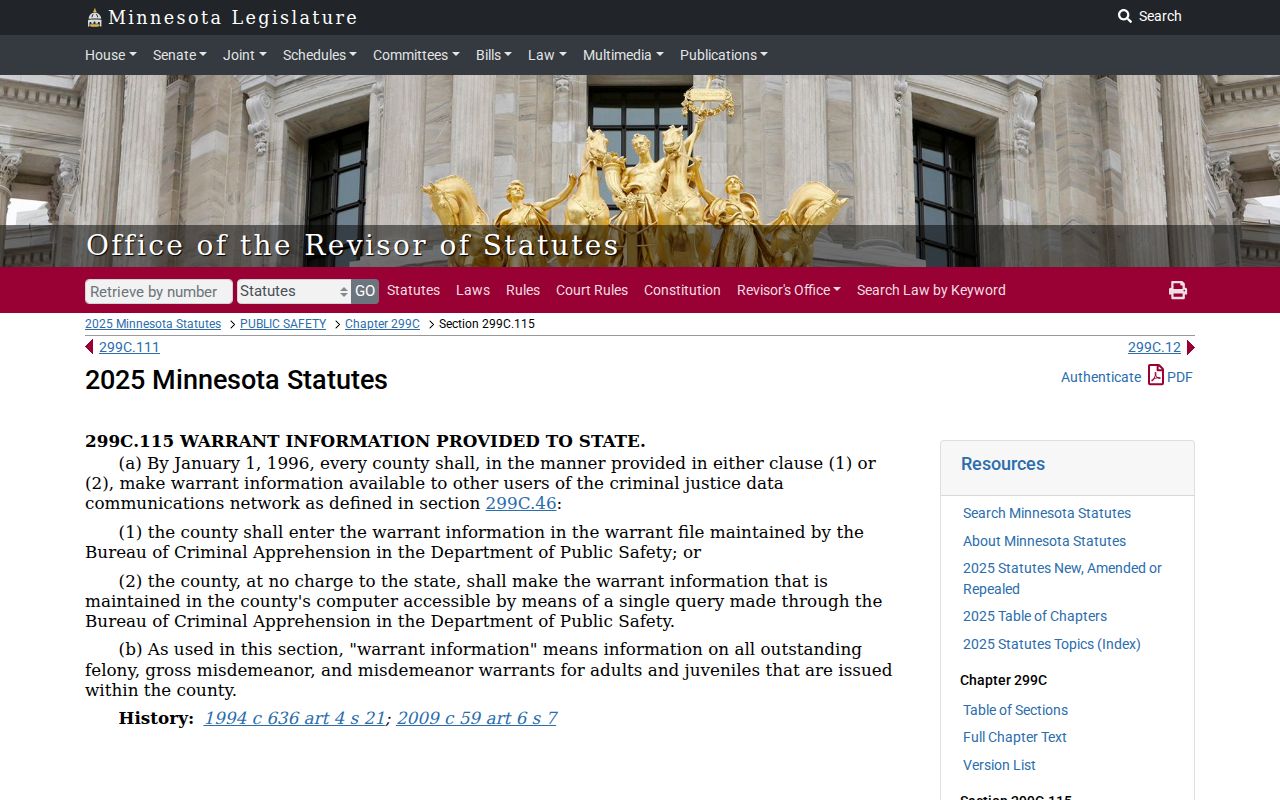
That statute sets a network requirement. It is the cleanest explanation of why a Traverse County list and a statewide search are not the same thing.
Traverse County Warrant Roundups
Traverse County runs no warrant roundup, amnesty week, or safe-surrender event, and it has no reward program of its own. What exists sits at the state and federal level. Each of those publishes its own interface.
Key Point: The U.S. Marshals Service covers Traverse County through the District of Minnesota and the North Star Fugitive Task Force, which can be reached at 612-664-5910. U.S. Marshals, District of Minnesota is a federal channel and not a county court record.
Minnesota Crime Stoppers accepts statewide tips at 800-222-8477 and can pay up to $1,000 for information that leads to a felony arrest. It is a statewide program, not a Traverse County office.
Minnesota DOC runs a separate wanted fugitives list for state-supervision cases.
When One Court Shows a Warrant
A case can look different in two places. In the state portal, a warrant flag can sit at the party level, which means it may belong to a different case than the one on the screen. A published Traverse County list entry carries no case number to match against. Work from the case number when you have one. Read the warrant section beside the case events, hearings, and bond activity. If that case is not the one you need, ask Court Administration what a records request would cover. A Traverse County warrant check is only as good as the record you compare it to.
The frequently asked questions page explains the limits behind those gaps. It spells out what the public portal does not display for Traverse County cases.
Finding Your Own Name on the List
Seeing your own name shifts the task. Now you need to know what the issuing court plans to do next, not just whether a Traverse County warrant is active. Call Court Administration at 320-422-6010 with the case number handy. Ask if the warrant is still active, which judge set the bail, and whether the case allows payment or a new appearance date. For custody or service details, the Sheriff's Office takes calls at 320-422-7800.
Important: Talk to an attorney before you turn yourself in. An open warrant can lead to arrest during any contact with law enforcement.
The home page walks through the next steps for an open warrant under Traverse County warrant records, including what to ask before you appear.
No Local Most Wanted Program
Traverse County keeps no curated most wanted gallery. Nor does the county run a Crime Stoppers partnership of its own. Instead there is a compiled list, a broad publication rather than a hand-picked set of high-priority cases. That gap matters when a name you expected is missing. A person can hold an open warrant and still appear on no published list anywhere. The county most wanted page points to the state and federal programs that do publish wanted information.