
How Arrest Warrants Work in Traverse County
An arrest warrant is a judge's written order to take someone into custody on a charge. A complaint and its supporting material must first convince the judge that probable cause exists, and the court must also decide a summons would not bring the person in. Minnesota Rule of Criminal Procedure 3 governs that choice. It also allows execution anywhere in the state, within its restrictions. So a warrant signed in Wheaton reaches past the Traverse County line. The rule frames every arrest warrant decision made here.
The Probable Cause Route
The paperwork starts with an officer. Traverse County law enforcement prepares the complaint plus the supporting material, and a judge reads it all. The judge weighs whether the person will respond to a summons and whether their location is known, then signs a warrant or issues a summons instead. A signed warrant must state the person's name or a description, the offense, the bail amount, and any conditions. Rule 4 takes over after an arrest, setting how fast the person goes before a judge.
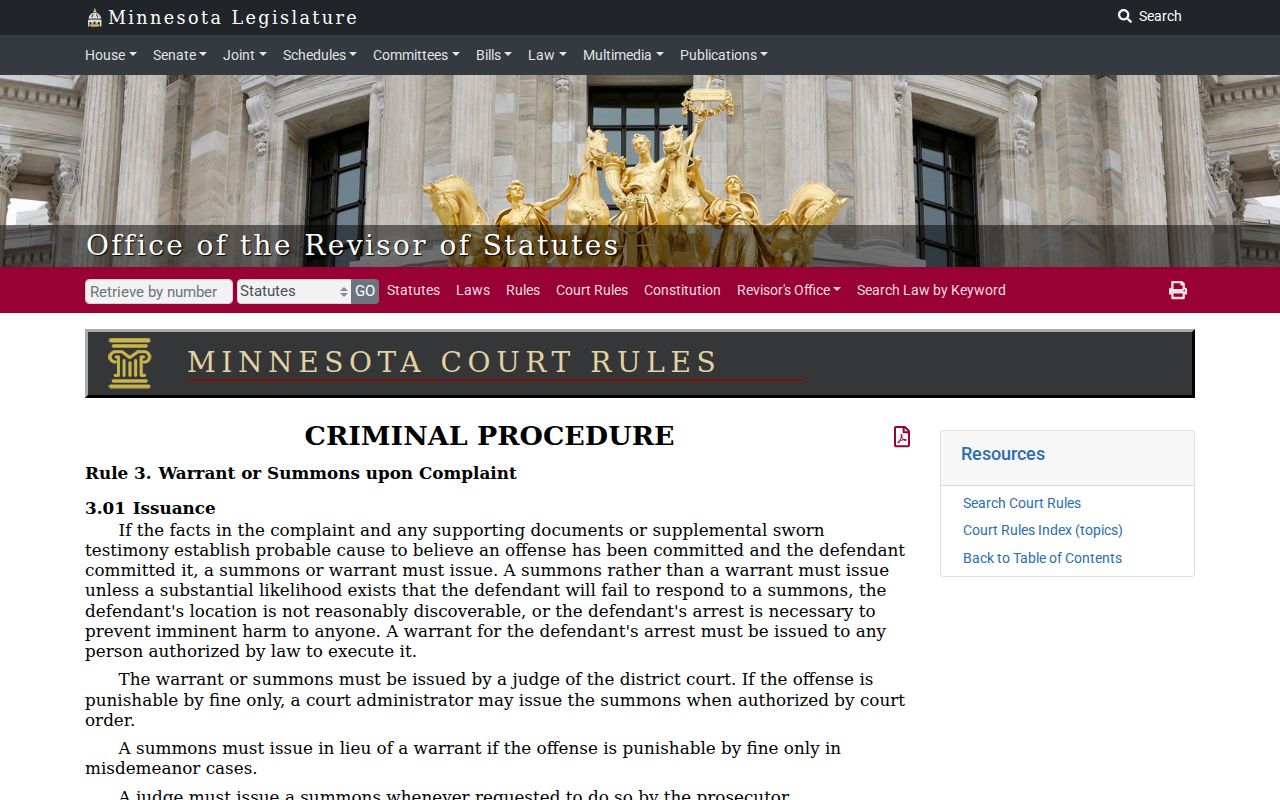
That rule is what a Traverse County judge weighs before signing anything. Reading it first will sharpen any argument you make about whether a warrant should exist at all.
Where Local Arrest Cases Are Filed
Felony, gross-misdemeanor, and misdemeanor charges are filed in Traverse County District Court, part of the Eighth Judicial District. Court Administration keeps the case file, the hearing calendar, and the bail record. Public-record questions go there, at 320-422-6010. The district office running the 13-county region hears no cases and answers none. Case questions belong with the local court office in Wheaton.
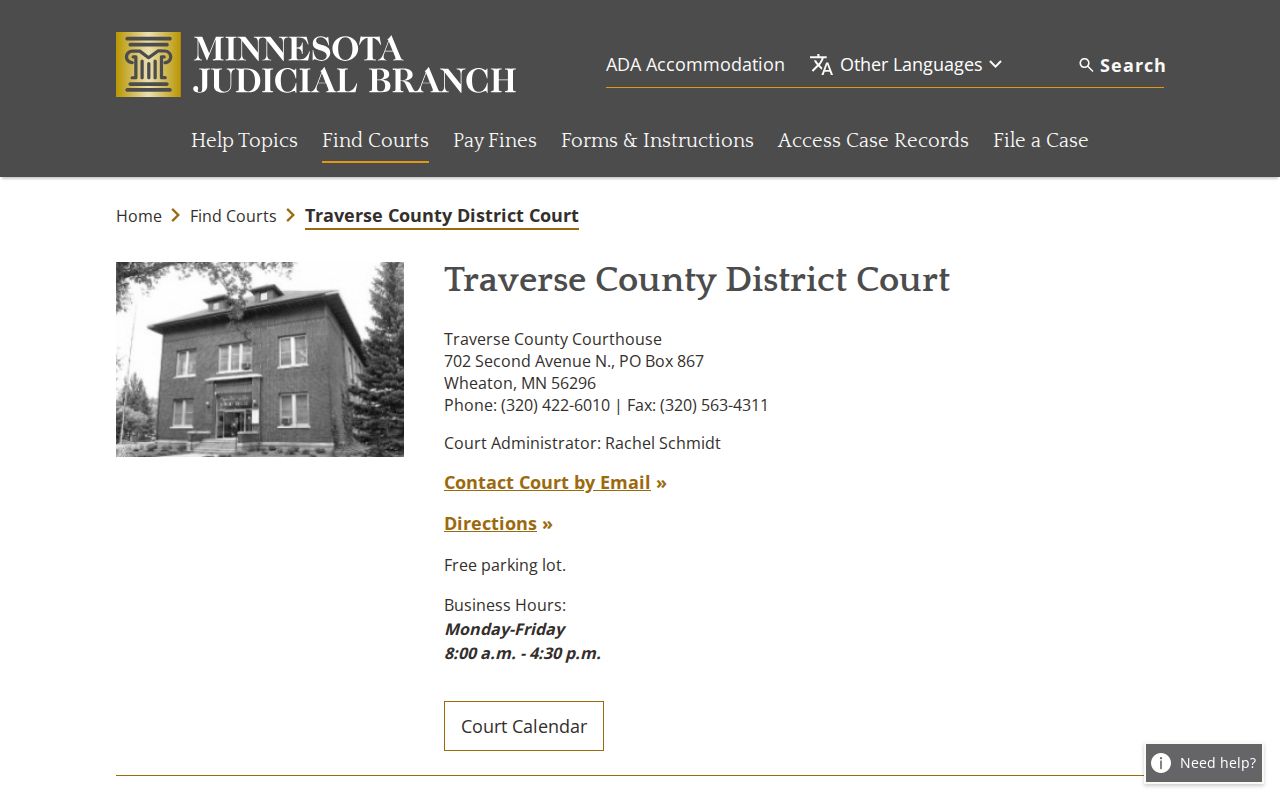
That page lists the Traverse County court's jurisdiction and the courthouse where arrest warrant cases are filed.
Arrest Warrants: What They Contain
The warrant document and the case file differ in detail. A Traverse County order stays short; the file explains the charge and conditions.
| Named subject | The person's name or a description if the name is unknown. |
|---|---|
| Charge or offense | The offense the complaint alleges, with a statute reference. |
| Issuing judge | The judge who reviewed the complaint and signed the order. |
| Bail and conditions | Set by that judge and recorded in the bond activity of the case. |
| Date issued | When the order was signed, which is not the date of any arrest. |
| Case number | The court's key to the file, and the detail every office will ask for. |
The published Traverse County list shows a name, a date, and charge text. The bail amount and issuing judge come from the court file.
How Warrants Get Served in Traverse County
Serving warrants is law enforcement work, and in Traverse County the Sheriff's Office handles most of it. Deputies cover every township plus Browns Valley, Dumont, and Tintah, and county material indicates Wheaton has its own police. Service can happen at home, at work, during a traffic stop, or when someone shows up at the courthouse or jail for another reason. After the arrest comes booking, a first appearance, and a bail decision on the charge in the warrant.
Bail, Conditions, and Court Dates
Bail is a court decision, not an office policy. The judge signing the warrant states the amount and conditions, and the Traverse County case file records that alongside the hearings. Ask Court Administration which judicial officer set the bail and whether posting it moves the next hearing date. Ask the Sheriff's Office whether the person is in custody and which counter takes a court-directed bond. Keep the receipt and the hearing date together.
Federal Warrants Sit Outside This System
Federal warrants live on a separate track. A federal warrant is filed in the U.S. District Court for the District of Minnesota, not in Traverse County court records. Federal dockets are reached through PACER when a record is public and unsealed, and the district court notes that warrants and surveillance orders are unsealed only by court order. The U.S. Marshals Service covers Traverse County through the District of Minnesota, a channel apart from the Sheriff's Office. A federal notice should go to a federal attorney or the federal clerk, never to the county list. That keeps the two systems from being confused.
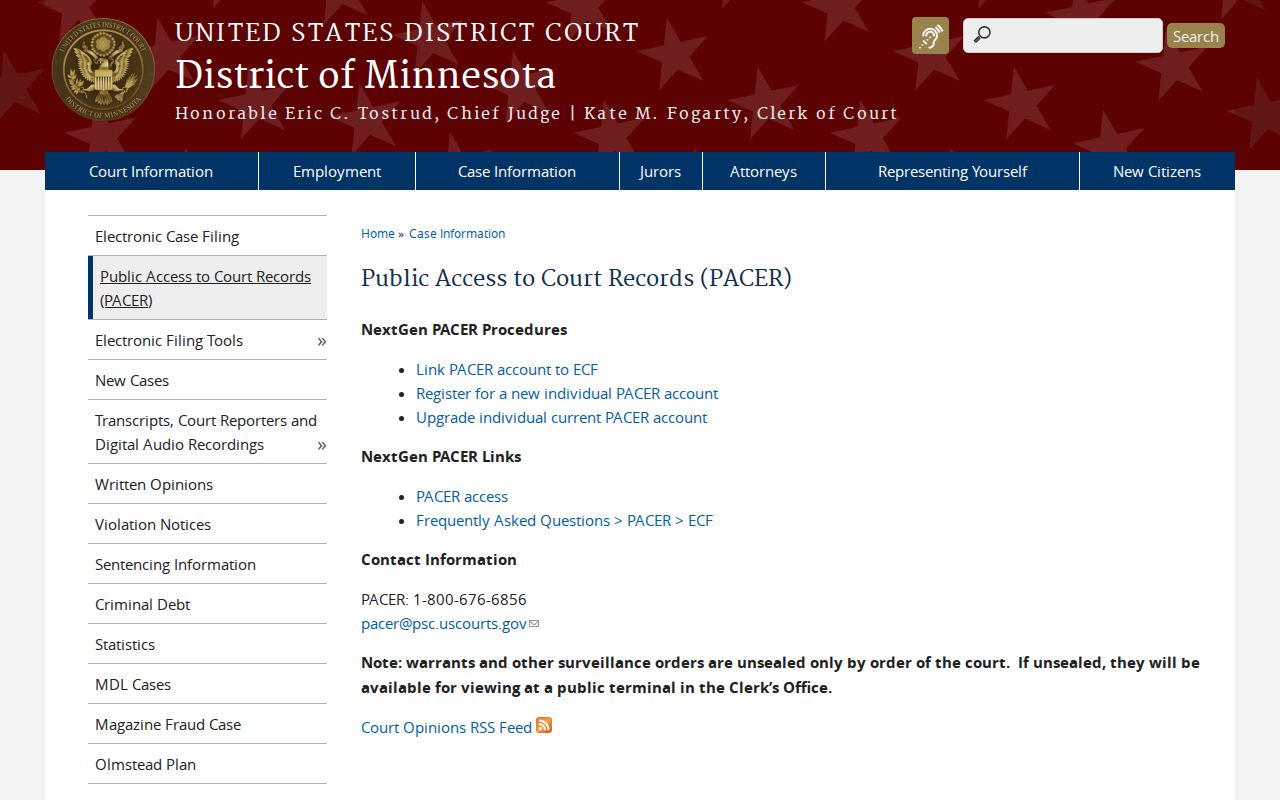
Traverse County records cover state and local warrants only; a separate federal process governs when a federal warrant record opens to the public and how to request it.
Arrest Warrants, Summonses, and Bench Warrants
Minnesota courts choose between three tools, and the choice determines how a person responds.
| Feature | Arrest Warrant | Summons | Bench Warrant |
|---|---|---|---|
| What it orders | An arrest on a charge | An appearance on your own | An arrest after a missed obligation |
| Basis | Probable cause of an offense | A charge that does not require custody | Failure to appear or comply |
| Who issues it | A judge, on a complaint | The court or an officer | The judge handling the case |
| How to respond | Surrender, bond, or counsel | Show up on the date | Appear or seek a recall |
The bench warrant lookup page covers the missed-date side in Traverse County, including what a failure to appear changes.
What Happens After an Arrest
Minnesota Rule of Criminal Procedure 4 governs the hours after an arrest, requiring that the person be brought before a judge without unnecessary delay. In a county with one courthouse, that hearing happens in Wheaton. The first appearance reviews bail and addresses counsel. Booking is not the end of the process. Anyone with an open Traverse County warrant should talk to an attorney about how that hearing will go.
Handling an Arrest Warrant in Your Name
Confirm the warrant before acting on it. Ask Traverse County Court Administration for the case number, charge, issuing judge, and bail, then decide how to appear. The paths are voluntary surrender, posting bond, and a motion to recall or quash, and each works better with counsel.
Important: Talk to a lawyer before you turn yourself in. An active arrest warrant can lead to arrest at any traffic stop or contact with law enforcement.
No bond schedule or recall form is published here. In Traverse County, the judge on the case sets the amount and the terms. For the practical steps on an open warrant, see Traverse County warrant records.
No Local Bond Schedule
Traverse County publishes no bail schedule, no amount-by-charge table, and no list of accepted payment instruments for bond. The court fee page covers copies, not releases. The Sheriff Administration fee page covers records and media requests. That gap is no accident. Bail turns on the charge, the judge, and the person's history, so the only reliable number is the one attached to the case itself. Ask for that figure in writing before you arrange anything.